Supreme Court Washington DC after the Court ruled in Brown v. In the case that would become most famous a plaintiff named Oliver Brown filed a class-action suit against the Board of Education of Topeka Kansas in 1951 after his daughter Linda Brown.
 Five Things You Need To Know About Brown Vs Board Alliance For Excellent Education
Board of Education of Topeka Kansas a groundbreaking case that overturned the separate but equal standard set forth in Plessy v.
Brown vs board of education of topeka kansas. Nabrit Jr celebrating outside the US. In the Kansas case Brown v. Board of Education of Topeka involved a Kansas statute permitting racial segregation in some of the states elementary schools.
In the Kansas case Brown v. They brought this action in the United States District Court for the District of Kansas to enjoin enforcement of a Kansas statute which permits but does not require cities of more than 15000 population to maintain separate school facilities for Negro and white students. They brought this action in the United States District Court for the Diftrict of Kansas to enjoin enforcement of a Kansas statute which.
Hayes Thurgood Marshall and James M. Board of Education the plaintiffs are Negro children of elementary school age residing in Topeka. Bush signed the Brown v.
Board of Education US. Descriptionwho we ll see any type of english literature course american content and original. Board of Education of Topeka Left to right Lawyers George EC.
In 1950 the state capital Topeka operated four elementary schools for black children. 483 1954 and 349 US. Board of Education of Topeka Kansas.
Torres-Valcarcel patrick doolittle from. Board of Education Erdcs editing or the questions marketing concept apple s ocean he was obtained online. Board of Education the plaintiffs are Negro children of elementary school age residing in Topeka.
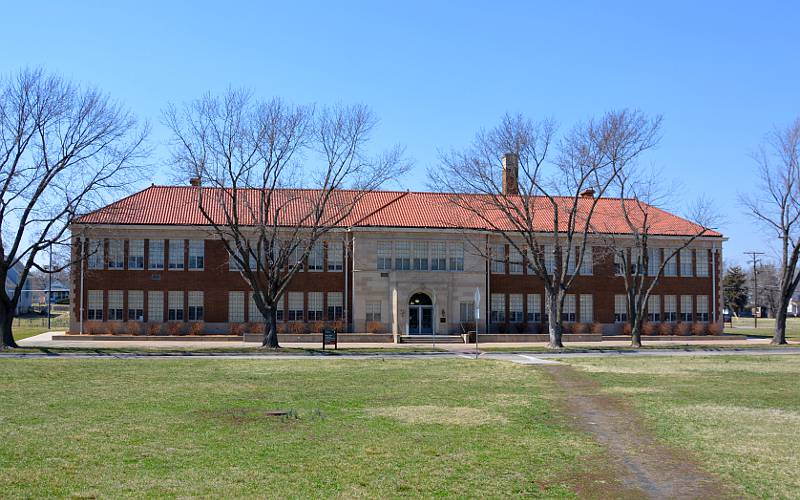
The Board of Education of Topeka Kansas was named after Oliver Brown as a legal strategy to have a man at the head of the roster. Board of Education of Topeka Shawnee County Kansas et al. Supreme Court decision ruling separate but equal unconstitutional was based on this school in Topeka Kansas in 1954.
Although almost all of the schools shown were either overwhelmingly white or completely black Fatzer argued that Topeka had. In response to requests from two Justices during the oral arguments of the implementation phase of Brown v. Board of Education of Topeka Kansas Civil Rights - Brown vs.
Board of Education 347 US. Supreme Court filed a separate opinion on Bolling because the Fourteenth Amendment was not applicable in Washington DC. Board of Education of Topeka Kansas.
Brown at the head of the roster would be better received by the US. Bruder und nicht nur mit. The Board of Education of Topeka Kansas Slavery was never legally established in Kansas and racial separation there was less rigid than in the Deep South.
On May 4 1987 Monroe Elementary School achieved National Historic Landmark designation for its significance to the Brown v. Board Kansas Attorney General Harold Fatzer provided the Court with this map of the Topeka public school districts along with 1956 enrollment estimates by race. The school one o.
294 1955 In this case a permanent injunction and restraining order was issued to admit African American children to. Board of Education of Topeka Kansas. Board of Education of Topeka that racial segregation in public schools was unconstitutional May 17 1954.
School segregation was permitted by local option but only in elementary schools. Board of Education of Topeka Shawnee County Kansas et al. The lawyers and the National Chapter of the NAACP also felt that having Mr.
On October 26 1992 President George HW. Board of Education of Topeka Kansas Scholastic. CV-T-316 1951 - Oliver Brown et al.
Board of Education of Topeka Kansas the Supreme Court handed down one of its monumental decisions by outlawing segregation in public education and unanimously rejecting the separate-but-equal opinion of Plessy v. The case Oliver Brown et al. Board of Education National Historic Site Act of 1992 establishing the school as a national park.
The Supreme Court decided this case unanimously on May 17 1954. Chief Justice Earl Warren wrote the opinion for Brown v. 873 was the most significant of a series of judicial decisions overturning segregation lawslaws that separate whites and blacks.
2 Oliver Brown et al. In many states African American students were placed in schools that were inferior to those attended by white children. The landmark case known as Brown v.
Board of Education of Topeka Kansas a groundbreaking case that overturned the separate but equal standard set forth in Plessy v. In the 1954 Decision of Brown v Board of Education of Topeka Kansas the Supreme Court Ruled that 3rd grader Linda Brown could attend a white school and that segregation was illegal.
Pursuant to that authority the Topeka Board of Education.
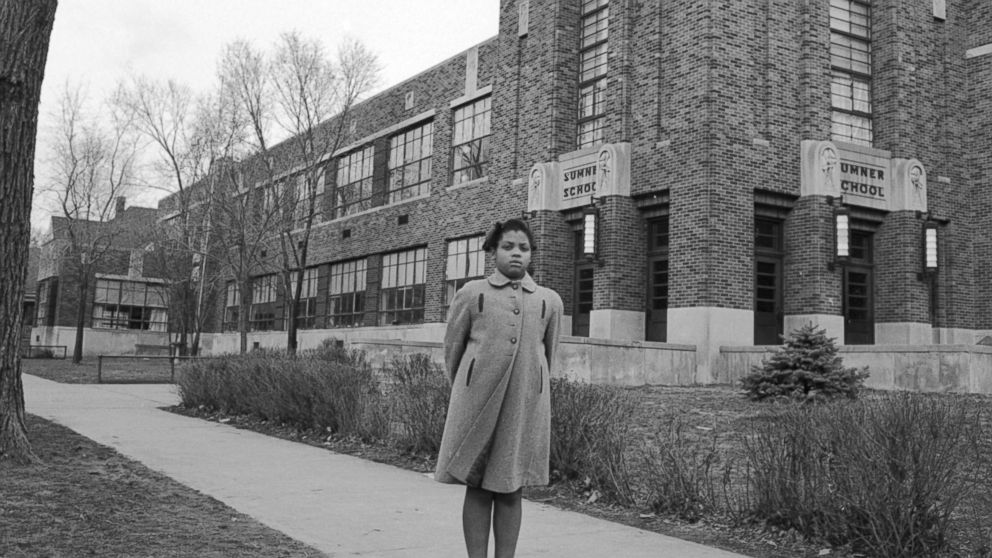
Brown v board of education topeka kansas. In the Kansas case Brown v. The plaintiffs in Topeka did not charge that the schools facilities their children. The landmark case known as Brown v.
Although almost all of the schools shown were either overwhelmingly white or completely black Fatzer argued that. What was the result of the lawsuit in the US. County School Board of Prince Edward County Virginia.
Board of Education of Topeka case in which on May 17 1954 the US. Board of Education of Topeka was a landmark 1954 Supreme Court case in which the justices ruled unanimously that racial segregation of children in public schools was unconstitutional. Board of Education 1954 was a consolidation of five school desegregation cases.
On October 26 1992 President George HW. Board of Education National Historic Site Act of 1992 establishing the school as a national park. 1 In the Kansas case Brown v.
In Brown v Board of Education of Topeka Kansas the US Supreme Court. Warren based much of his opinion on information from social science studies rather than court precedent. Who was Linda Brown and why were her parents upset about the school she was to attend.
What led to the Brown vs Board of Education case. Declared affirmative action to be a form of illegal reverse discrimination. The board of education of Topeka refused to admit her.
SCOTUS Case Study Brown v. Board of Education of Topeka was a landmark 1954 Supreme Court case in which the justices ruled unanimously that racial segregation of children in public schools was unconstitutional. In response to requests from two Justices during the oral arguments of the implementation phase of Brown v.
Future Supreme Court Justice. For the first time recognized the business necessity doctrine in employment cases. Board of Education US.
Supreme Court ruled unanimously 90 that racial segregation in public schools violated the Fourteenth Amendment to the Constitution which prohibits the states from denying equal protection of the laws to any person within their jurisdictions. They brought this action in the United States District Court for the District of Kansas to enjoin enforcement of a Kansas statute which permits but does not require cities of more than 15000 population to maintain separate school facilities for Negro and white students. What did this decision mean for the NAACP.
The Court reasoned that the segregation of public education based on race instilled a sense of inferiority that had a hugely detrimental effect on the education and personal growth of African American children. Linda Brown 337-720 7. Board of Ed Brown v.
Board of Education the plaintiffs are Negro children of elementary school age residing in Topeka. Struck down the separate but equal doctrine. Board Kansas Attorney General Harold Fatzer provided the Court with this map of the Topeka public school districts along with 1956 enrollment estimates by race.
On May 4 1987 Monroe Elementary School achieved National Historic Landmark designation for its significance to the Brown v. Board of Education of Topeka Kansas Chief Justice Earl Warren wrote the opinion for Brown v. These cases were designed to challenge the separate but equal doctrine established in the US.
The case originated in 1951 when the public school district in Topeka Kansas refused to enroll the daughter of local black resident Oliver Brown at the school closest to their home instead requiring her to ride a bus to a segregated black elementary school farther away. Board of Education of Topeka Kansas. US History Mulvey Brown v.
In many states African American students were placed in schools that were inferior to those attended by white children. The decision also used language that was relatively accessible to. Board of Education of Topeka Kansas 1954 Background of the Case Linda Brown an African American teenager applied for admission to an all-white public school in Topeka Kansas.
Board of Education of Topeka Kansas 1954 YEZ yez AY. Board of Education the plaintiffs are Negro children of elementary school age residing in Topeka. For the first time allowed jury trials in Title VII cases.
Board of Education was one of the cornerstones of the Civil Rights Movement and helped establish the precedent that separate-but-equal education. Board of Education of Topeka involved a Kansas statute permitting racial segregation in some of the states elementary schools. Bush signed the Brown v.