The time in the spring when the sun crosses the equator and when night and day are of equal. The vernal equinox takes place on March 20 or March 21 and signals the start of spring in the Northern Hemisphere.
 Spring Equinox Vernal Equinox Southern Northern
That is when the space of time between the rising and setting of the sun is one half of a natural day.

Definition of vernal equinox. Of relating to or occurring in the spring vernal equinox vernal sunshine 2. Vernal comes from the Latin word ver meaning spring The autumnal equinox marks the first day of autumn in the northern hemisphere and occurs when the sun crosses the equator going south. Also called spring equinox The performances begin with a Native American Equinox Celebration which indeed takes place today the vernal equinox.
In the northern hemisphere the vernal equinox marks the first day of spring and occurs when the sun moves north across the equator. At the vernal equinox the sun is moving along the ecliptic in a northeasterly direction. Vernal equinox Noun the moment when the sun appears to cross the celestial equator heading northward.
43 13 1 8. Equinox Hyper Mar March - spring springtime Desc autumnal equinox fall equinox September equinox Ant. Related to Vernal equinox point.
What is the vernal equinox. The time at which the sun crosses the plane of the equator towards the relevant hemisphere making day and night of equal length. Physical Geography the time at which the sun crosses the plane of the equator towards the relevant hemisphere.
Cambridge Dictionary Plus Mein. The onset of Spring according to the calendars of the UK US and many other countries in the Northern Hemisphere is called the Earths vernal equinox and occurs when the Earths axis which is tilted by 235 degrees relative to its orbit neither points towards the Sun as it does during the Northern Hemispheres Summer Solstice nor away from it as it did on the Winter. Tags for the entry vernal equinox What vernal equinox means in Telugu vernal equinox meaning in Telugu vernal equinox definition explanation pronunciations and examples of vernal equinox.
1 The equinox in spring on about 20 March in the northern hemisphere and 22 September in the southern hemisphere. Astronomy the time at which this occurs as. Astronomy astronomy the point lying in the constellation Pisces at which the suns ecliptic intersects the.
Fresh or new like the spring also. Meaning and definitions of vernal equinox translation of vernal equinox in Telugu language with similar and opposite words. Vernal-equinox meaning One of two points at which the ecliptic intersects the celestial equator.
The time in the spring when the sun crosses the equator and when night and day are of equal. It occurs about March 21 in the N hemisphere Sept 23 in the S hemisphere 2. V is the vernal equinox a point on the ecliptic from which several celestial coordinates are measured.
Astronomy either of the two occasions six months apart when day and night are of equal length. Astronomy another name for equinoctial point. The name given to two periods of the year when the days and nights are equal.
The vernal equinox also called the spring equinox is one of the two equinoxes the times of the year when the amount of daylight and nighttime hours are just about of equal length. Spoken pronunciation of vernal equinox in English and in Telugu. Vernal equinox Bedeutung Definition vernal equinox.
Youthful Other Words from vernal Did You Know. Vernal equinox Noun the point where the. During the vernal or spring equinox the amount of daylight and darkness is nearly.
The angle VSN in degrees of arc is the longitude of the ascending node ie of the point where the moving planet passes north of the plane of Earths orbit. Vernal equinox n 1 the time at which the sun crosses the plane of the equator towards the relevant hemisphere making day and night of equal length.
Spring equinox is also known as Vernal equinox and brings numerous celebratory days and festivals around the world. In 2021 the March equinox will occur on Saturday March 20 at sharp 2137 Australian Eastern Daylight Time AEDT.
 Nasa Space Place The March Equinox Arts Fredericksburg Com
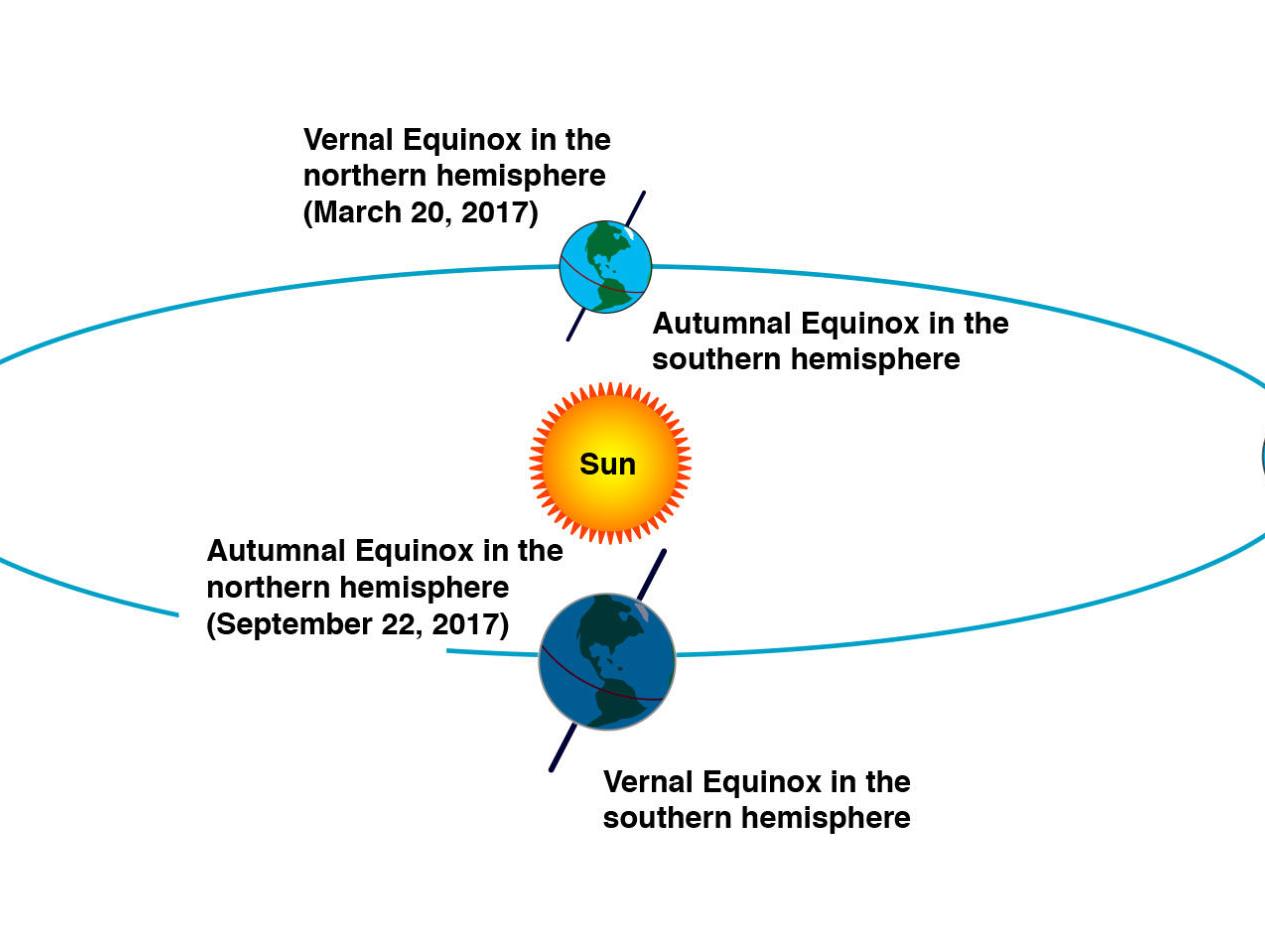
On March 20 th we have the beginning of Spring here in the Northern Hemisphere and the beginning of Autumn in the Southern Hemisphere.
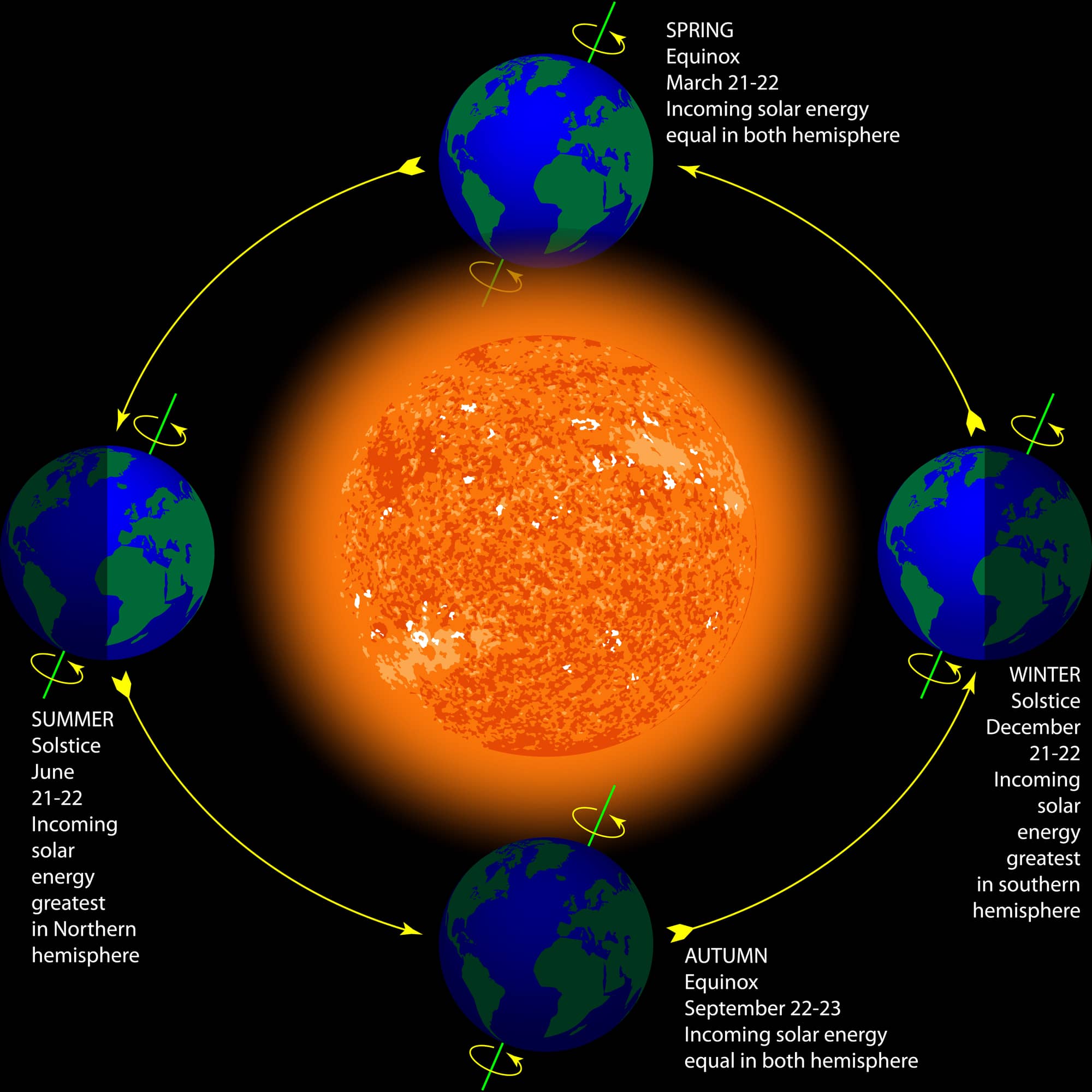
Vernal equinox southern hemisphere. For countries in the Southern Hemisphere like Australia and South Africa the vernal equinox marks the start of their autumn. Neither her north nor her south poles are tilted into or away from the sun. March equinox marks the arrival of the first day of fall in the southern hemisphere.
I had until recently thought that the northward equinox was the vernal equinox even in the Southern Hemisphere. According to the astronomical definition of the seasons the vernal equinox also marks the beginning of spring which lasts until the summer solstice June 20 or 21 in the Northern Hemisphere December 21 or 22 in the Southern Hemisphere. I had read that in the equatorial coordinate system right ascension was.
VernalAutumn Equinox- The Willpower to Transform Again The Universe Wants to Support Your Dreams Fire in the Belly Stars in Your Eyes. The Vernal Equinox is the point at which on Earth the sun crosses the equator and in the sky crosses the celestial equator which lies in the constellation Pisces. Similarly during September it is autumn time in the Northern hemisphere and September Equinox is called Autumnal Equinox and Fall Equinox while it is springtime in the Southern hemisphere and September Equinox is called Vernal Equinox and Spring Equinox.
I am hoping some of the English-speaking Southern Hemisphere residents can give me some help with this question. Thats when the Northern Hemisphere will see its maximum tilt towards the Sun. The March Equinox is called the Autumnal or Fall Equinox while the September Equinox is called the Vernal or Spring Equinox.
Which equinox is referred to by the phrase vernal equinox in the Southern Hemisphere. Happy VernalAutumn Equinox and astrological new year my Astromomma Fam. The spring season will last until the summer solstice occurs at the end of June.
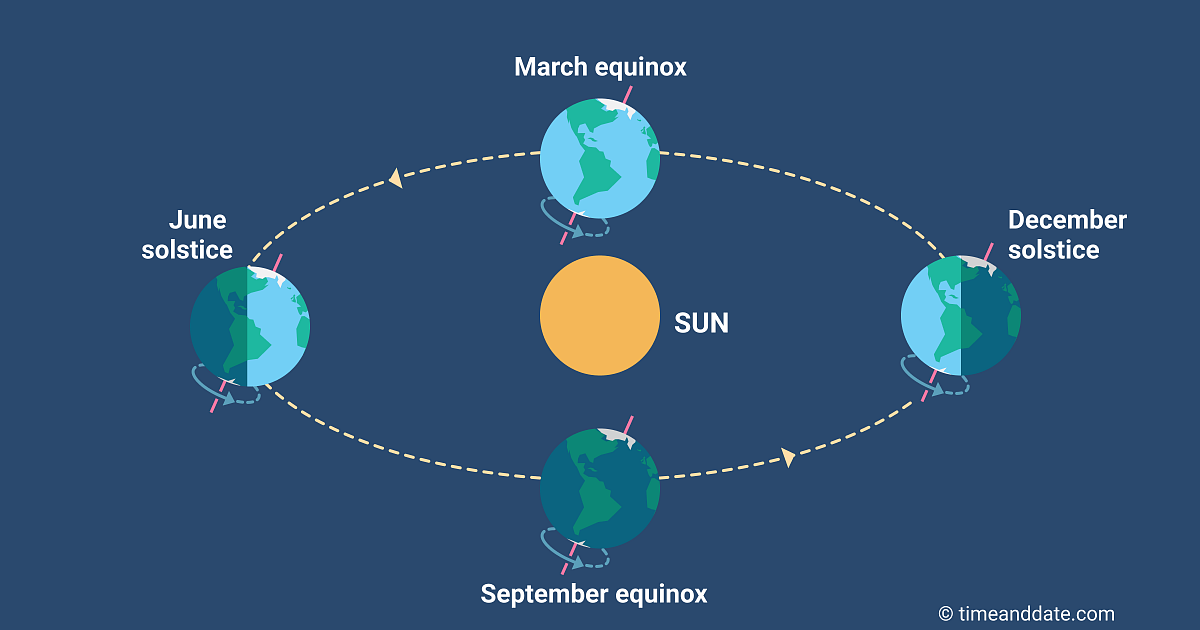
Not Entirely Equal Day Night On the equinoxes the Sun shines directly on the equator and the length of day and night is nearly equal but not quite. After March equinox transition of the season is experienced in Northern hemisphere towards hotter days while Southern Hemisphere countries like New Zealand Australia Chile South Africa Argentina move towards cooler days. Equinoxes and solstices happen twice a year.
This occurs on or about March 21st in the Northern Hemisphere and on our about September 23rd in the Southern Hemisphere. The spring vernal equinox in the Northern Hemisphere is also known as the March equinox. In the southern hemisphere the reverse is true.
Thats why in the earths southern areas lets say in Australia the March equinox is known as the fall equinox or autumn equinox. The March equinox marks the moment the Sun crosses the celestial equator the imaginary line in the sky above the Earths equator from south to north. The Vernal Spring Equinox in the Northern Hemisphere is the Autumnal Fall Equinox in the Southern Hemisphere and vice versa.
For countries in the Southern Hemisphere like Australia and South Africa the vernal equinox. This will mean longer daylight hours and warmer temperatures. Each year around the 20th of September in the southern hemisphere in 2003 it will be the 23rd of Sept our beautiful green and blue planet earth lies flat in her orbit of the sun.
In the Southern Hemisphere the equinox occurs on September 22 or 23 when the Sun moves south across the celestial equator. Its called the autumnal fall equinox in the Southern Hemisphere. She is fully facing the sun no turning away.
One may also ask what does fall equinox mean. Equinox literally means equal night.
 The Spring Equinox Explained Accuweather
The March equinox is known as the vernal equinox spring equinox in the Northern Hemisphere and as the autumnal equinox in the Southern.

Vernal equinox and autumnal equinox. During equinoxes the sun is directly over the Earths equator. About Press Copyright Contact us Creators Advertise Developers Terms Privacy Policy Safety How YouTube works Test new features Press Copyright Contact us Creators. March Equinox September Equinox Equinoxes Autumnal Equinox Seasonal Change Day And Night What Is The Equinox Earth Equator Earth Terminator.
The Northern Hemisphere blew by the longest day of the year with Junes summer solstice then the Autumn equinox on September 22 2020 the day when the sun passes directly over Earths Equator. The autumnal equinox occurs around September 22nd when the sun crosses the celestial equator going south. When it crosses from north to south its Autumnal Equinox.
Then on September 22 the autumnal equinox will signal the. When the Sun crosses the equator from south to north its Vernal Equinox. The Vernal Spring Equinox in the Northern Hemisphere is the Autumnal Fall Equinox in the Southern Hemisphere and vice versa.
Vernal Equinox Northern Hemisphere USA Central America. Not Entirely Equal Day Night On the equinoxes the Sun shines directly on the equator and the length of day and night is nearly equal but not quite. The vernal equinox occurs when the sun changes from south to north of the celestial equator appearing to cross the celestial equator and intersecting the constellation Pisces.
Another way of defining equinox is the time when the Sun crosses the celestial equator. Are gamma and Omega sometimes used just because they resemble the above symbols. From the vernal equinox 1854 days elapse before the autumnal equinox.
Winter is officially coming. Sometimes the equinoxes are nicknamed the vernal equinox spring equinox and the autumnal equinox fall equinox although these have different dates in the Northern and Southern Hemispheres. On the vernal spring and autumnal fall equinoxes day and night are nearly the same length the date on which day and night are actually closest to the same length is called the equilux and occurs a few days towards the winter side of each equinox.
Equinoxes and solstices happen twice a year. This is the vernal equinox which means the green time of equal nights and. The March equinox is the vernal equinox in the Northern Hemisphere and the autumnal equinox in the Southern.
Only 1798 days elapse from the autumnal equinox until the next vernal equinox. On the Gregorian calendar the northward equinox can occur as early as 19 March or as late as 21 March at Greenwich. Equinoxes and solstices happen twice a year.
Are and the conventional symbols to use. However I have never seen the symbol for autumnal equinox. An alternative name for vernal equinox is First Point of Aries.
Should it be either Libra or Omega Omega. See some of Britains best Autumn walks. On March 20 2021 nature will once again bring us the vernal equinox the time of year that ushers in spring in the Northern Hemisphere.
The sun appears to cross the celestial equator at this point on about March 21st each year. In the year 2007 for example the vernal equinox is 8 minutes after midnight Greenwich Mean Time on March 21 2007 and the autumnal equinox is 951 pm. In the northern hemisphere the spring or vernal equinox happens around March 21 when the sun moves north across the celestial equator.
The Vernal Spring Equinox in the Northern Hemisphere is the Autumnal Fall Equinox in the Southern Hemisphere and vice versa.